
Pathfinder  |  SKU: RSR-PFPFBL36-110
Sold out

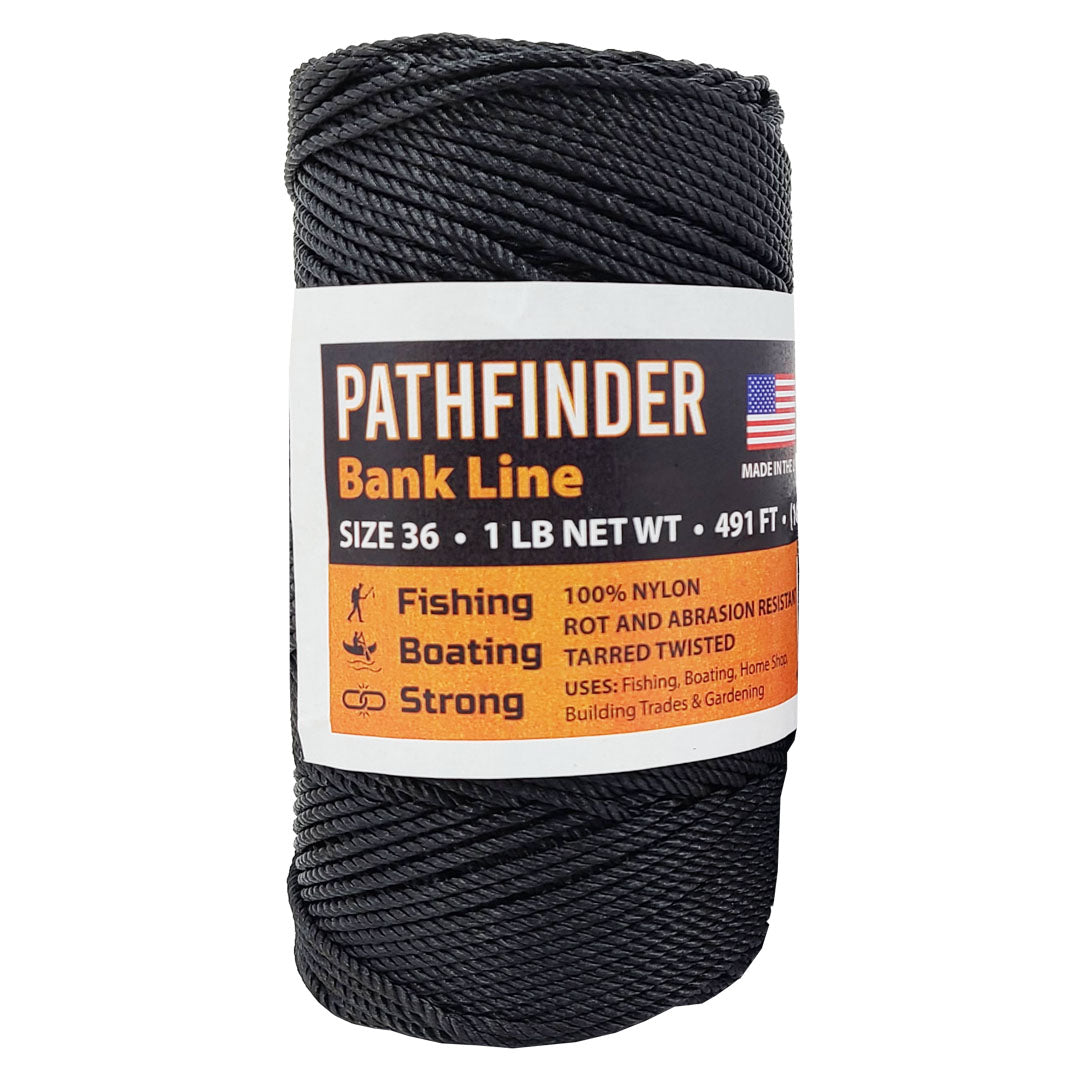
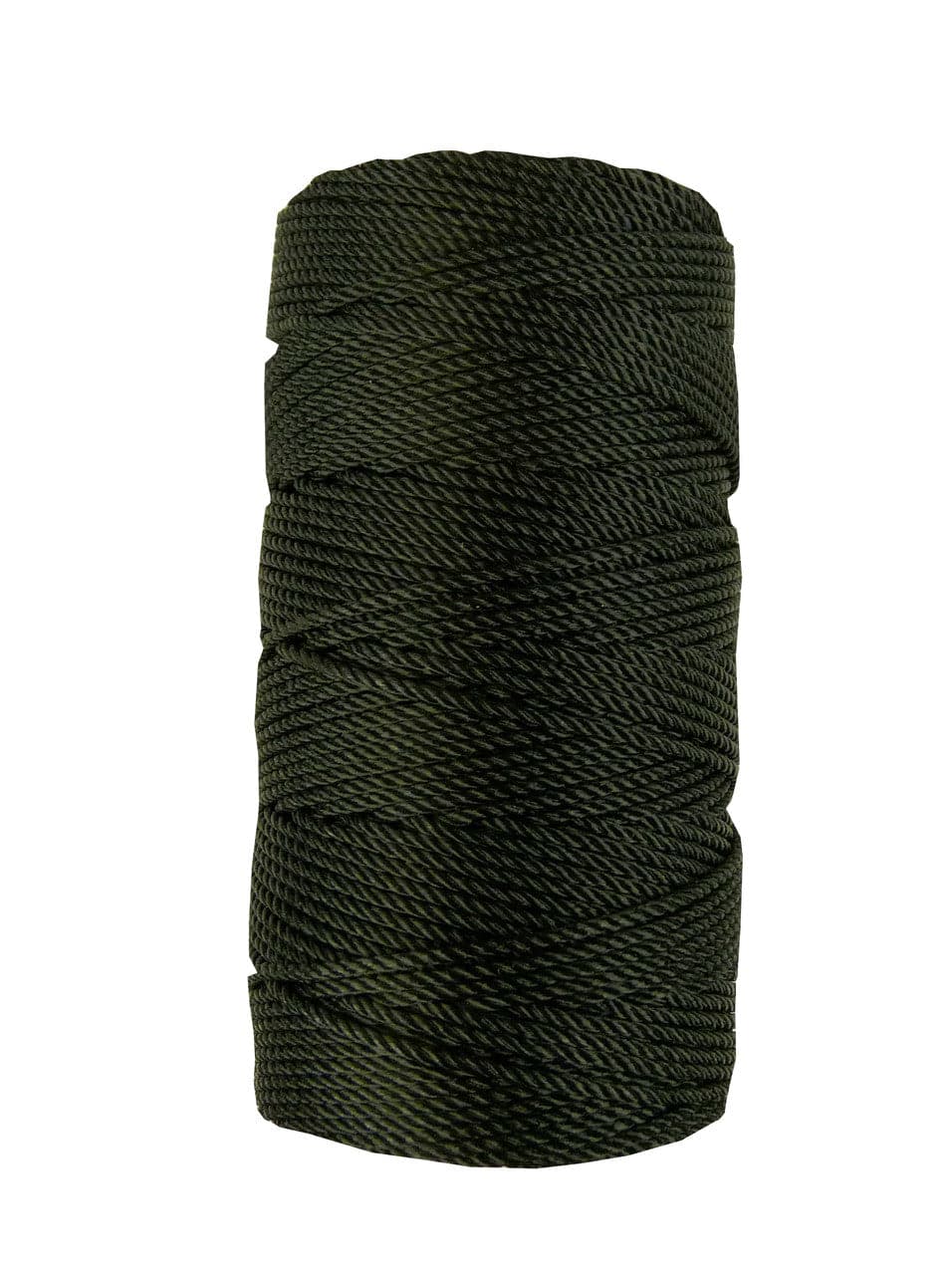
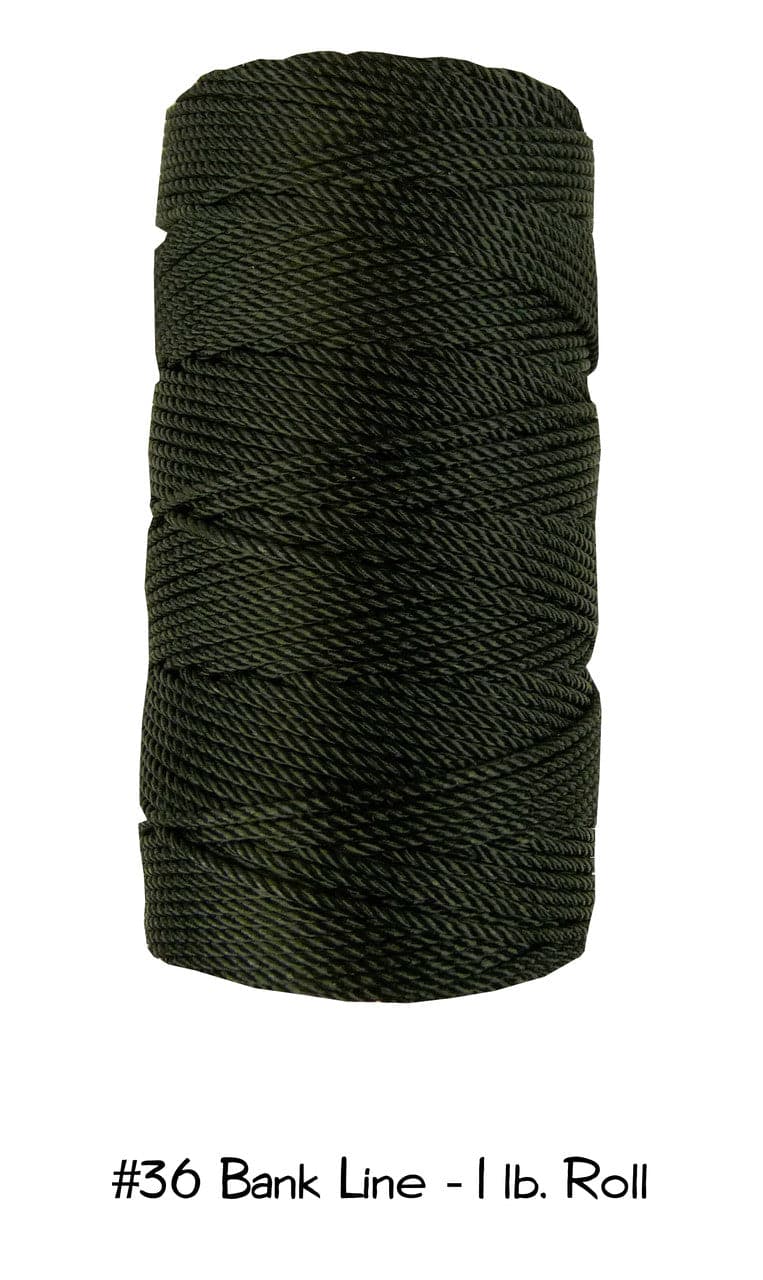
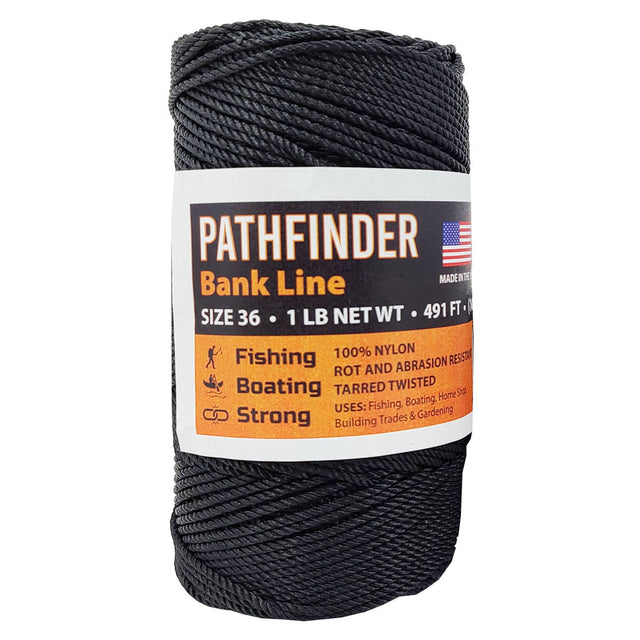
Pathfinder - Black Tarred Bank Line, 470 Ft, 340LB Strength

Regular price $2399
Shipping calculated at checkout.


Ethereum Bitcoin Pay with Crypto — Choose Bankful at checkout.

Description

Tarred Twisted Nylon Twine - 1 lb. spool contains approximately 470 linear feet with a 340 lb. breaking strength. This twine is black-treated and dried before it’s put on a reusable plastic spool. It has many advantages over twine treated by “spool dunking.” It is uniformly and deeply coated from one end to the other - no “zebra stripes” or tar globs to come off on your hands. It’s dry, easy to tie, and holds knots well.

Specs:

  • 470 linear Feet
  • 340 lb Tensile Strength
  • .085" Diameter

Note: Tarred bank line can have a strong odor at first which will dissipate over time.

Bank Line vs. Paracord

Paracord is a favorite in the survivalist community. This versatile cordage can rig a shelter, secure your supplies in a storm, make a survival snare — whatever it is, you can do it all with paracord.

Bank line also has a lot of the same outdoor applications. Plus, tarred bank line is an especially excellent option for tying knots: That extra tar coating enhances knotting performance, guaranteeing an easy tie and exceptionally strong hold.

Overall, paracord is stronger: Pathfinder 550 Paracord has a tensile strength of 550 pounds. But a high-quality roll of tarred twine isn’t far behind. The Pathfinder No. 36 Bank Line has a breaking strength of 340 pounds, so it’s strong enough for ridgelines, fishing nets, boating, and other common uses.

But there is a reason many outdoorsmen prefer bank line, and it’s because it does have a slight advantage in terms of size. Since bank line cord has a smaller diameter than paracord, it’s lighter and will take up less space in your gear pack.

So, if your goal is efficient packing for a days-long wilderness trip, bank line might be a better choice. If you need extra strength, go with paracord. And if you want to cover all your bases, get both.

What You Can Do with Bank Line Cord

Bank line was created for trotline fishing, which is where you set up a main line with multiple baited hooks from the bank of a river or other waterway. As such, it’s purpose-built for marine applications and prized for its water resistance.

But turning your cord into a trotline to fish is just one way to transform this cord into a helpful tool. Here are some of the different purposes you can use tarred bank line:

  • Hanging loops for drying your gear or wet clothes

  • Making tools such as a spear or knife by wrapping the cord and finishing with a knot

  • Creating a taut ridgeline for a tarp shelter or a hammock

  • Raising a bear bag to keep your food supplies out of reach from bears

  • Setting traps and snares (tarred bank line is extra stiff, making it ideal for snares)

  • Fishing using the line or by creating netting to trap fish

  • Building a shelter for garden plants

As long as tarred twine that’s twisted (as opposed to a braided bank line), you can also separate the pieces of twine if you need a thinner cord for fishing or tying smaller knots.

When you choose good-quality bank line, you can do almost anything with your cordage — and you’ll be able to use it for years. Our Pathfinder bank line cord is nearly as strong as paracord, but it gives you all the benefits of tarred twine: Extra stiffness, water and rot resistance, and better knots.


Product UPC
817414017612

Model
#36 Bank Line 1 lb Roll

Manufacturers Part Number
PFBL36-110

Payment & Security

Payment methods

  • American Express
  • Apple Pay
  • Diners Club
  • Discover
  • Google Pay
  • JCB
  • Mastercard
  • Visa

Your payment information is processed securely. We do not store credit card details nor have access to your credit card information.

Frequently Asked Questions

What makes tarred bank line different from regular nylon twine?

Tarred bank line is distinct due to its black-treated coating which enhances durability and knotting efficiency. Unlike regular nylon twine, the tarred coating provides water resistance and prevents rot, making it ideal for outdoor applications like fishing and shelter building. This treatment also ensures that knots hold better, which is crucial in survival situations. However, the initial odor can be strong, though it dissipates over time.

How does the breaking strength of tarred bank line compare to paracord?

Tarred bank line has a breaking strength of 340 pounds, which is less than the 550 pounds of standard paracord. While paracord is stronger, bank line offers advantages in terms of size and weight, making it a more compact option for packing. This makes it suitable for situations where space and weight are critical, such as in a bug out bag or during long hikes.

In what emergency scenarios is tarred bank line most useful?

Tarred bank line is particularly useful in scenarios requiring reliable knotting and water resistance. It's ideal for setting up shelters, creating fishing nets, or securing gear. Its water-resistant properties make it a good choice for marine environments or wet weather conditions. However, for tasks requiring higher tensile strength, paracord might be more appropriate.

Can tarred bank line be used for making fishing nets?

Yes, tarred bank line is excellent for making fishing nets due to its water resistance and knot strength. The tar coating helps the line withstand prolonged exposure to water without degrading, making it a reliable choice for fishing applications. Its ability to hold knots securely ensures that the net remains intact under stress.

How does the tarred coating affect the handling of the bank line?

The tarred coating on the bank line enhances grip and knot security but can initially leave a residue on hands. This coating ensures that knots are less likely to slip, which is crucial in survival situations. However, users should be prepared for the initial tackiness and odor, which will fade with time and use.

What are the advantages of using tarred bank line in a bug out bag?

Tarred bank line is a compact and versatile addition to a bug out bag, offering strength and water resistance. Its smaller diameter compared to paracord allows for efficient packing, making it ideal for emergency scenarios where space is limited. For a comprehensive list of essential items for your bug out bag, visit our Essential Items for a Bug Out Bag: A Checklist of Necessities.

Is tarred bank line suitable for building shelters?

Tarred bank line is well-suited for building shelters due to its knot-holding capability and weather resistance. Its strength is sufficient for creating ridgelines and securing tarps, making it a reliable choice for temporary shelter construction. However, for more permanent structures, additional support materials might be necessary.

What are some common uses of tarred bank line in survival situations?

In survival situations, tarred bank line can be used for a variety of tasks including setting traps, creating fishing lines, and securing gear. Its versatility and durability make it a valuable tool for any survival kit. For more insights on essential survival gear, explore our 20 Essential Survival Gear Items for Your Emergency Kit 2025.

How does the diameter of tarred bank line impact its usability?

The .085" diameter of tarred bank line makes it a lightweight and space-efficient option for various tasks. Its smaller size compared to paracord allows for more compact storage, which is advantageous when packing for extended trips or when space is at a premium. This makes it particularly useful for tasks that don't require the full strength of paracord.

What considerations should be made when choosing between bank line and paracord?

When choosing between bank line and paracord, consider the specific needs of your situation such as strength requirements and space constraints. Paracord offers higher tensile strength, making it suitable for heavy-duty tasks, while bank line's compact size is ideal for lightweight packing. For a balanced approach, incorporating both into your gear can cover a wider range of scenarios.